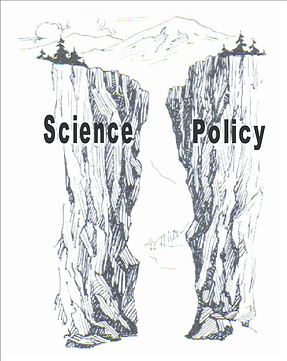
Science Policy w/Dr.Croker
Course Overview: This course introduces the world of Canadian science policy by simulating the fast-paced environment of a government policy team. Working in groups, we followed the full policy cycle: identifying a national health issue, researching barriers through environmental scans and literature reviews, designing evidence-based solutions, and planning for implementation using tools like project management, risk management, and performance measurement. Along the way, we learned how government levers such as legislation, regulations, grants, and public engagement shape health policy and influence research translation. Lectures and activities highlighted real-world challenges, from pediatric medicine access to drug regulation, and underscored the importance of including diverse voices in policy.
Assignment Highlights
Engagement Strategy
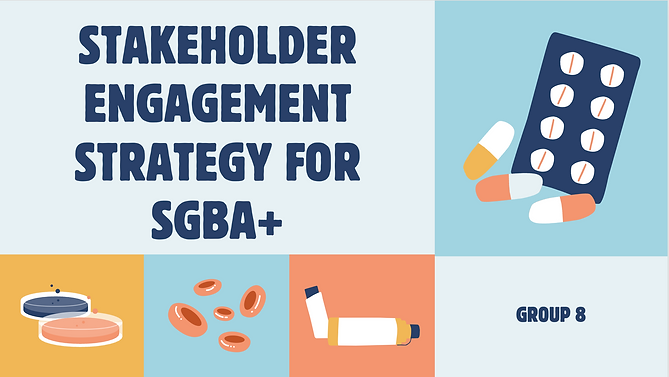
Click here to View the full Powerpoint
This course introduced me to how science translates into real government policy. Working in policy teams, we followed the steps a federal team would take: identifying a national health issue, reviewing evidence, consulting stakeholders, and designing solutions. A major focus was Sex- and Gender-Based Analysis Plus (SGBA+), which emphasizes how sex, gender, and intersecting identities affect health outcomes. Through lectures and case studies, we saw the risks of overlooking these factors, such as drugs tested mainly in men causing harm in women, or medical devices giving inaccurate results for certain populations.
As a group, we created a Stakeholder Engagement Strategy for SGBA+ integration. Our plan outlined the roles of government agencies, advocacy organizations, researchers, and industry, while emphasizing patient involvement, Indigenous leadership, and international alignment.
Working on the engagement strategy slides challenged me to think about policy not just as theory, but as practice. Each stakeholder, from government funders to patient advocates, brought unique priorities and power, and our task was to weave them into a strategy that felt both inclusive and actionable. I learned how easily tokenism or gaps in training can derail equity goals, and why transparency and culturally safe engagement are so critical. Creating these slides reinforced that policy-making is not only about evidence, but also about relationships, trust, and clear communication. It showed me how stakeholder mapping can transform abstract equity goals into concrete, achievable actions.
Environmental Scan

Click to see the Full Scan
This environmental scan examined how sex and gender are or often are not integrated into health research, drug development, and regulation. Across the ten reviewed studies, a consistent pattern emerged: although awareness of sex and gender differences has grown, their practical application in research and policy remains inconsistent. The papers highlighted persistent reliance on male subjects in preclinical studies, underrepresentation of women in clinical trials, and the failure to analyze or report sex-specific outcomes. Key examples included women experiencing higher rates of adverse drug reactions due to male-centered drug design, and medical devices such as pulse oximeters producing less accurate readings for patients with darker skin tones. Policies like the NIH “Sex as a Biological Variable” (SABV) mandate and Canada’s SGBA+ framework have pushed for greater inclusivity, but gaps remain in enforcement, training, and consistent reporting.Overall, the review showed that integrating SGBA+ improves scientific rigor, reproducibility, and health equity by making research more representative and evidence-based.
Conducting this review taught me how deeply systemic biases run in biomedical research and how real the consequences can be for equity-deserving groups. What stood out most was the disconnect between policy frameworks and their implementation, many agencies mandate SGBA+, but researchers still lack the tools or accountability to apply it meaningfully. This assignment pushed me to think critically about how policy, regulation, and research culture must align to ensure science truly serves all populations. It also reinforced my belief that applying SGBA+ is not optional but essential for trustworthy and ethical research.
This course taught me that policy work is iterative, collaborative, and often challenging, but it is also one of the most powerful ways to make meaningful change. I realized that effective policy isn’t just about designing solutions, it’s about engaging stakeholders early, balancing competing interests, and creating strategies that are both inclusive and evidence-informed.On a personal level, I found myself growing in adaptability and teamwork. Each assignment demanded critical thinking under pressure and the ability to quickly translate complex scientific evidence into practical solutions. Learning how to apply SGBA+ in real scenarios also challenged me to think beyond the science and consider equity, accountability, and lived experience as central to good policy. Overall, this course strengthened my confidence in leading collaborative projects and showed me how science and policy together can drive systemic change.