The Simon Lab

Into the Drosophila Lab
As the Neuroscience group, The Cortex Crew, we had the privilege of working in a Drosophila laboratory, broadening our scientific skills and experience.

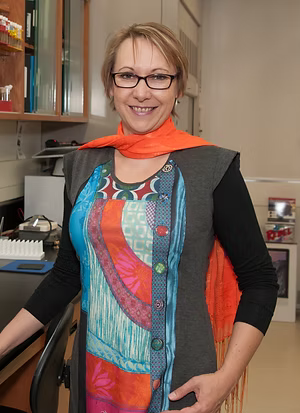
Meet Our Supervisor
Our Deliverables
Exploring Trade-Offs Across the nlg3 Allelic Series This project investigates how varying levels of Neuroligin 3 (nlg3) expression affect fecundity in Drosophila melanogaster. Neuroligin genes encode synaptic cell-adhesion proteins essential for neural development and function and are implicated in human neurodevelopmental disorders. Using Drosophila as a genetically tractable model, we examine fecundity across three experimental manipulations of nlg3: complete gene deletion, RNAi-mediated knockdown, and cDNA-driven overexpression. These approaches are implemented using the GAL4/UAS system to assess how altered nlg3 expression influences reproductive output within the context of the fecundity–longevity trade-off. Together, this work aims to clarify the role of nlg3 in reproductive biology and contribute to understanding how neural genes can shape life-history traits.
Immune Challange Protocol This protocol outlines larval and adult Drosophila melanogaster immune challenge assays used to assess innate immune responses following oral bacterial infection. Because Drosophila relies exclusively on innate immunity, survival and bacterial load provide effective readouts of immune function mediated primarily by the IMD and Toll signaling pathways. Using Gram-negative and Gram-positive bacteria, these assays evaluate how genetic factors, particularly loss of neuroligin 3 (nlg3), influence host resistance, antimicrobial peptide activity, and survivorship. Together, the larval bacterial load assay and adult survival analysis provide complementary measures of immune competence and allow investigation of how neural genes modulate systemic innate immune signaling.
This course challenged me to think about communication not just as delivering facts, but as building connections. I learned that clarity, inclusivity, and storytelling are as important as accuracy when sharing science with different audiences. Through practice, whether writing lay summaries, giving pitches, or leading microteaches, I became more aware of my own habits and grew more confident in tailoring complex ideas for peers, professionals, and the public. Most importantly, I left the course with a deeper appreciation that good science is only impactful if it is communicated in a way that people can understand and act on.