
SWOSON
Southwestern Ontario Stroke Network

The Southwestern Ontario Stroke Network team is based out of the Regional Stroke Centre at University Hospital, London Health Sciences Centre in London, Ontario. Our geography spans 10 counties with a population of 1.6 million people.
Our mission is to continuously improve stroke prevention, care, recovery and re-integration. This is achieved by collaborating with partners to re-organize stroke care delivery to ensure that all Ontarians have access to appropriate, quality stroke care in a timely manner.

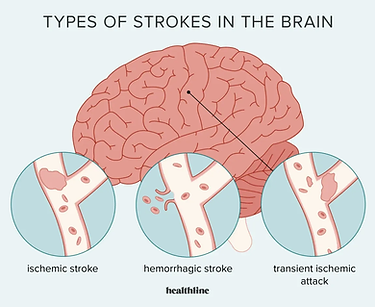


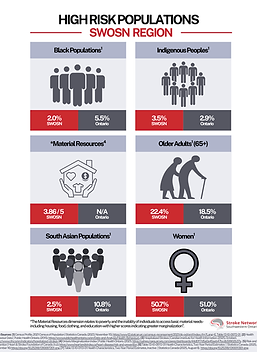
My community rotation with the Southwestern Ontario Stroke Network (SWOSN) allowed me to apply my academic knowledge in a real-world, community health context. Through developing community risk profiles, I worked with publicly available data to identify key stroke risk factors across the region and better understand how population-level trends can inform health interventions.
One of the most valuable aspects of this experience was learning how to translate complex data into meaningful insights that can be used by community partners. I also gained a deeper appreciation for the challenges of working with real-world data, including limitations in data availability and differences in how regions are defined and reported. These challenges required adaptability and critical thinking when interpreting and presenting findings.
Overall, this rotation strengthened my ability to approach health issues from a population health perspective and highlighted the importance of using data to guide community-based decision-making. It reinforced the need to connect research with practical application and consider how broader social and structural factors influence health outcomes.
This course challenged me to think about communication not just as delivering facts, but as building connections. I learned that clarity, inclusivity, and storytelling are as important as accuracy when sharing science with different audiences. Through practice, whether writing lay summaries, giving pitches, or leading microteaches, I became more aware of my own habits and grew more confident in tailoring complex ideas for peers, professionals, and the public. Most importantly, I left the course with a deeper appreciation that good science is only impactful if it is communicated in a way that people can understand and act on